
The history
of Neapolitan pizza
From its humble beginnings in the back streets of Naples to the legend of the Margherita: a wood-fired oven, a long-fermented dough, and three centuries of repeated gestures. This is what we keep alive on Place des Cardeurs, in Aix-en-Provence.
The chapters of this story
Each chapter leads to a dedicated page on the site, so you can read further and then come and taste our Neapolitan pizza in Aix-en-Provence.
Born in the back streets of Naples
Neapolitan pizza was born in Naples, in a city where working people were after a simple, fast and cheap meal. Through the 18th and 19th centuries, this disc of dough topped with tomato became an emblematic street food, sold by the slice and eaten standing up.
That deeply working-class history still explains its spirit: few ingredients, but the right produce, and one gesture repeated to perfection. Understanding those origins means grasping why the Neapolitan rests on fundamentals we respect in Aix — dough worked with patience, quality tomato, melting mozzarella, a fierce bake. Nothing superfluous: it is a matter of mastery, not of piling on toppings.
The Margherita and the legend of 1889
No history of Neapolitan pizza would be complete without the Margherita. According to the best-known legend, it was created in Naples in 1889 by the pizzaiolo Raffaele Esposito in honour of Queen Margherita of Savoy, its three colours echoing the Italian flag: the red of the tomato, the white of the mozzarella, the green of the basil.
Beyond the story, the Margherita became the symbol of a simple, balanced pizza, the benchmark of any good pizzaiolo: it is the one that judges a dough, a bake, a hand. That is the legacy we carry on in our own version.
- 1889The legend of the Margherita in Naples
- 24hFermentation of our Neapolitan dough
- 480°The vault of our wood-fired oven
Three centuries, one bite
A story that is told at the table
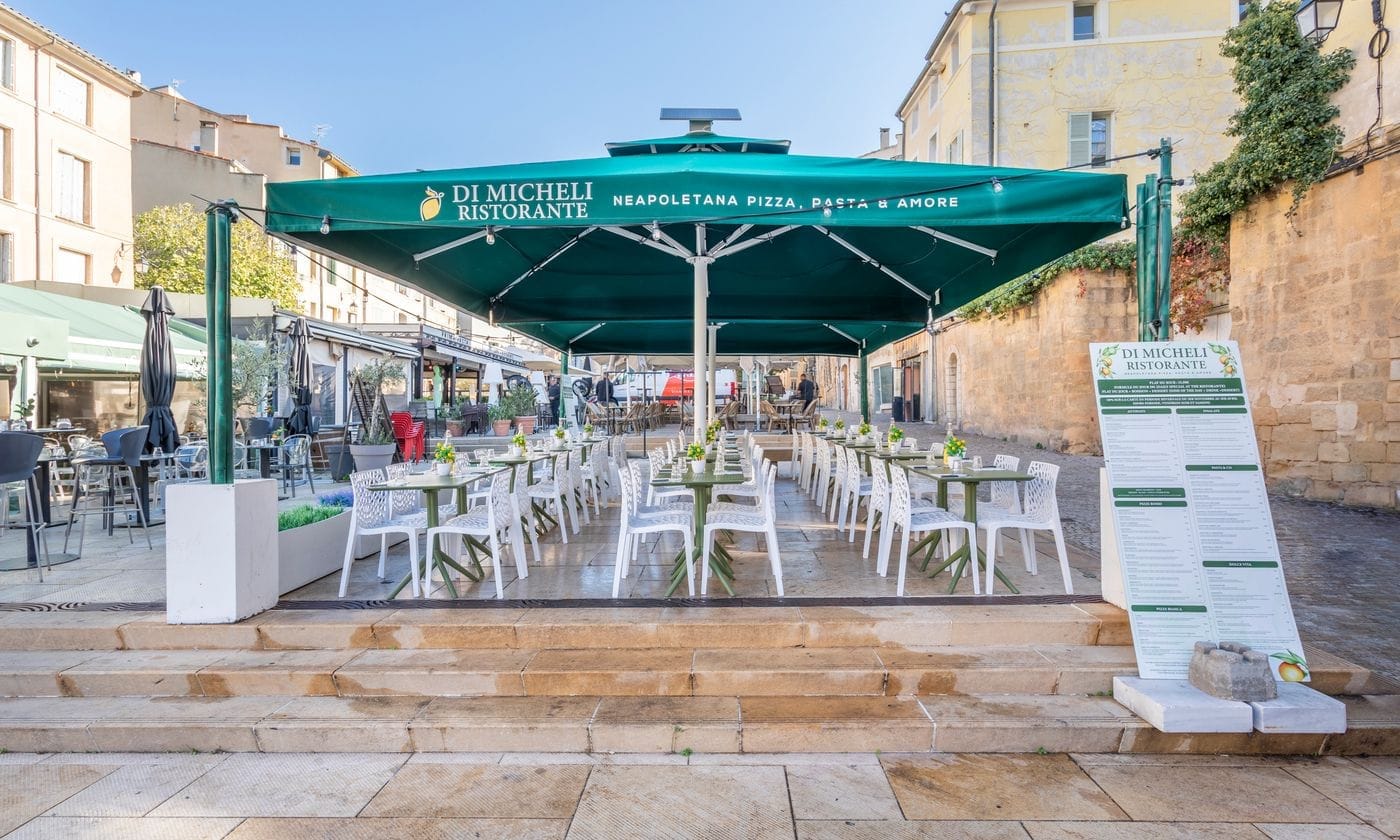
Place des Cardeurs, inside or on the terrace: the pizza leaves the oven and arrives scorching hot. That is where — and only where — three centuries of Neapolitan tradition finally make sense.
The oven and the dough, the heart of the craft
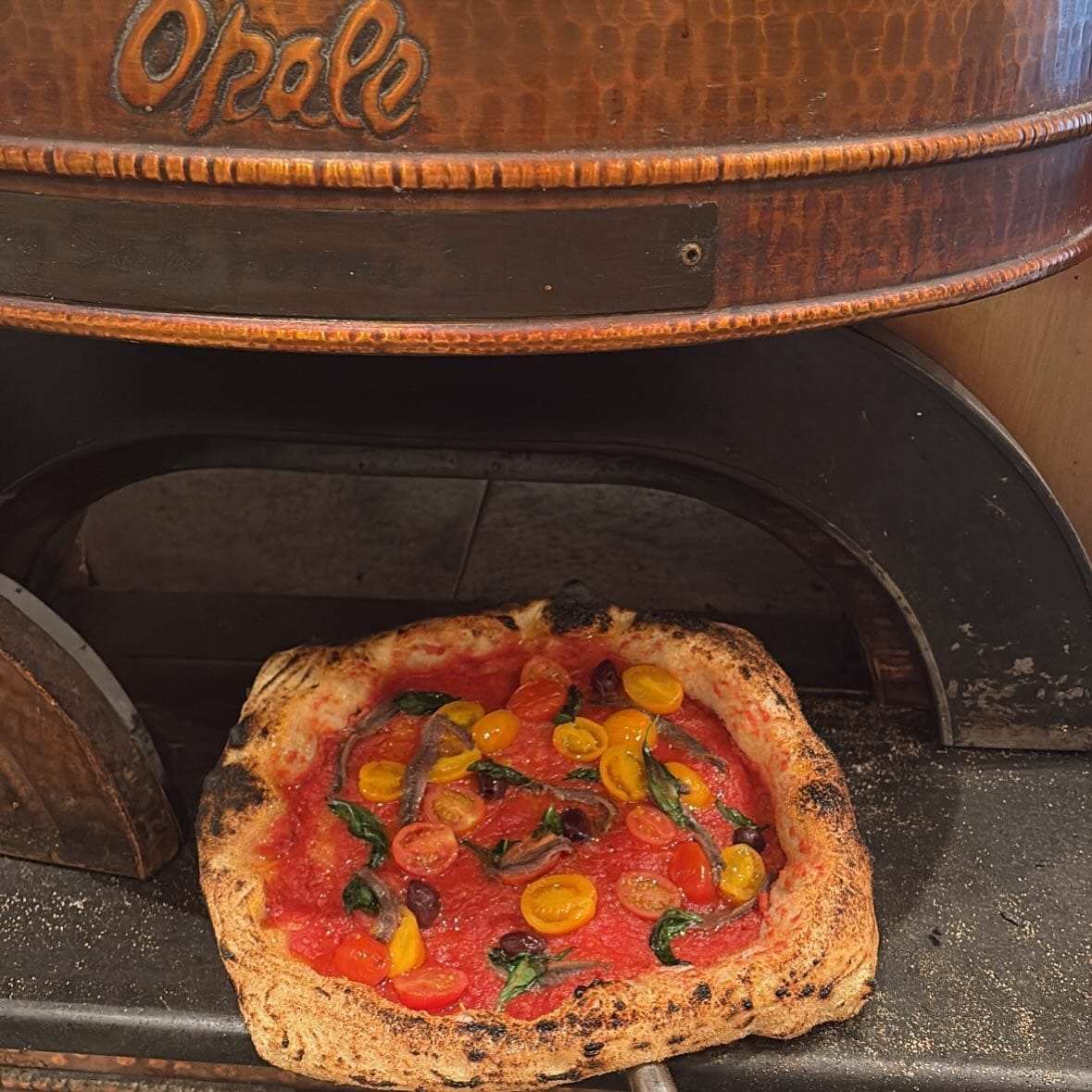
If Neapolitan pizza stands apart, it is first thanks to two gestures inherited from Naples: fermenting the dough and baking over wood. In our trattoria the dough ferments for 24 hours at 70% hydration before spending a few seconds only in an oven heated to 480°.
That intense heat puffs the rim, lightly marks the dough and gives it its characteristic softness. The long fermentation, in turn, makes the pizza easier to digest and brings out the aromas of the flour. These are the principles, handed down for generations in Naples, that we apply without shortcuts.
The story goes on at Place des Cardeurs
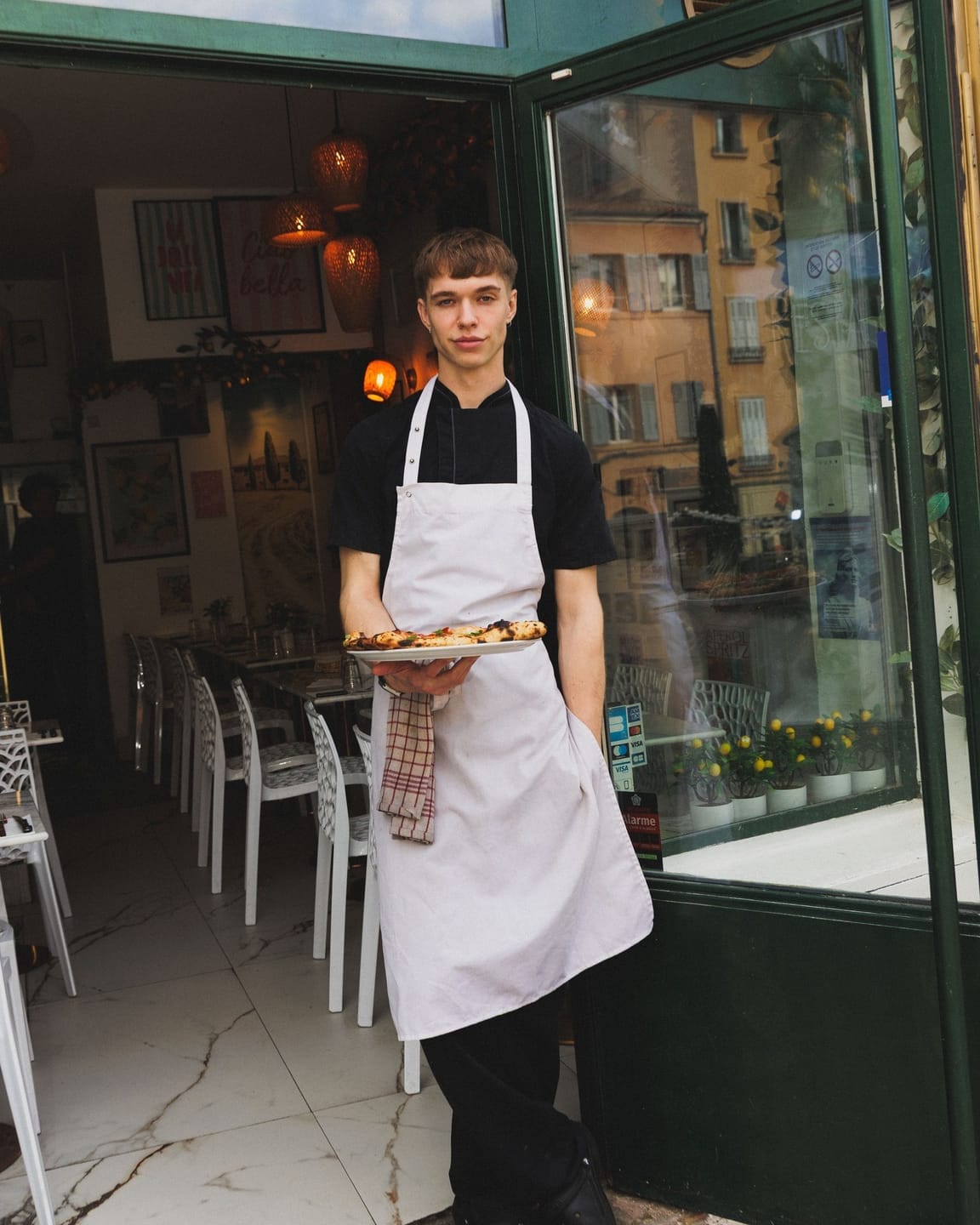
Di Micheli is a family trattoria open since September 2021, run by a team of five, at 13 Place des Cardeurs in Aix-en-Provence. Our approach belongs to that long Neapolitan history: a short menu, fresh produce, no frozen dough and everything made in house. We serve a contemporary Neapolitan pizza, faithful to the fundamentals while owning a few variations such as burrata.
Whether you are passionate about Italian cooking or simply curious about this history, we will be glad to share our reading of the classic with you, right in the heart of the historic centre of Aix-en-Provence. Enjoy the read, and see you very soon at the table.
Neapolitan pizza is now recognised far beyond Naples, and its history keeps being written in trattorias like ours. To explore every facet of it, browse the article devoted to Neapolitan pizza on Wikipedia, then come and taste it inside or on the terrace, Place des Cardeurs.
It all starts with the Neapolitan pizza, its 24-hour fermented dough and its wood-fired bake. Then the story gets its topping: the margherita way or the burrata pizza way. Three centuries on, the best way to understand Naples is still to taste. See you very soon in Aix-en-Provence.
Carry the story onto your plate
A few pages to go further after your read, from the Neapolitan pizza to booking your table.
The history of Neapolitan pizza: your questions
Where was Neapolitan pizza born?
Neapolitan pizza was born in Naples, Italy, where it grew as a working-class food from the 18th and 19th centuries onwards. That street origin still explains its spirit: few ingredients, but quality produce.
What is the story of the Margherita pizza?
According to the best-known legend, the Margherita was created in Naples in 1889 by the pizzaiolo Raffaele Esposito, in honour of Queen Margherita of Savoy, its three colours echoing the Italian flag. It has since become the symbol of Neapolitan pizza.
What defines a true Neapolitan pizza?
A Neapolitan pizza is recognised by its long-fermented dough and its fast bake in a very hot wood-fired oven, which forms a puffed, soft rim. At Di Micheli the dough ferments for 24 hours at 70% hydration before a pass through the wood-fired oven at 480°.
Why does long fermentation matter?
Long fermentation, inherited from the Neapolitan tradition, makes the pizza lighter and easier to digest while bringing out the aromas of the flour. That is why we let our dough ferment for 24 hours before baking.
Why was pizza a working-class dish in Naples?
Because it answered a simple need: a fast, cheap meal, sold by the slice and eaten standing in the street. That constraint shaped the recipe — few ingredients, but carefully chosen, with the craft concentrated in the dough and the bake.
Where can I taste a Neapolitan pizza in Aix-en-Provence?
At Di Micheli, 13 Place des Cardeurs, 13100 Aix-en-Provence. Our family trattoria, open since September 2021, welcomes you at lunch and dinner, inside or on the terrace.
Taste the history in Aix
After the read, the tasting: book your table at Di Micheli, Place des Cardeurs, and discover our wood-fired Neapolitan pizza.