
A pizza dough
fermented for 24 hours
Our dough rests for 24 hours and gets a double kneading before it meets the wood-fired oven: lighter, airier, easier to digest. Come and taste it on Place des Cardeurs, in the very heart of Aix-en-Provence.
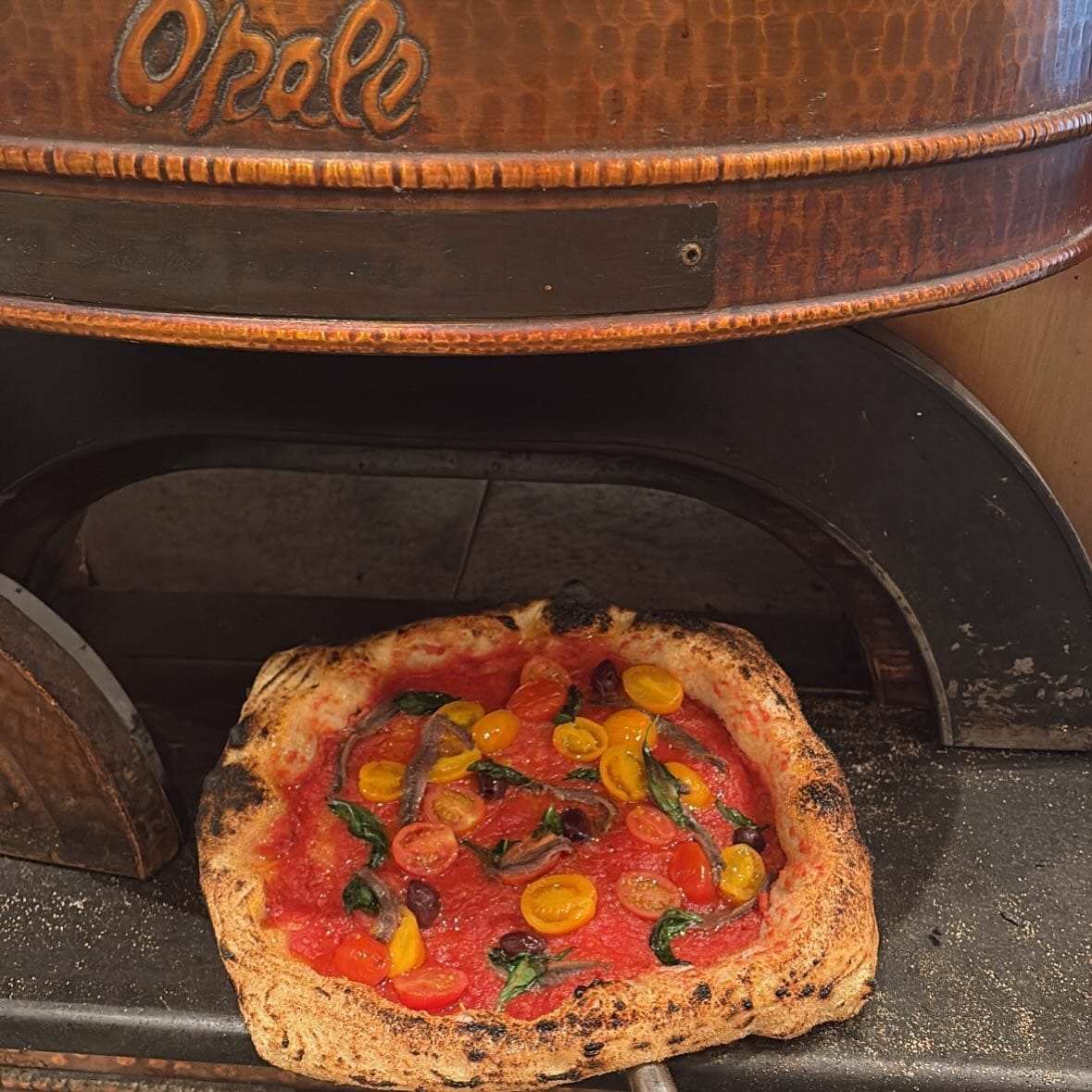
Three markers, no shortcuts
A Neapolitan dough comes down to three settings. Ours do not move, at lunch or at dinner.
24h
of rest, with a double kneading, before baking
70%
hydration, for an airy, open crumb
480°
in the wood-fired oven, for a bake of a few seconds
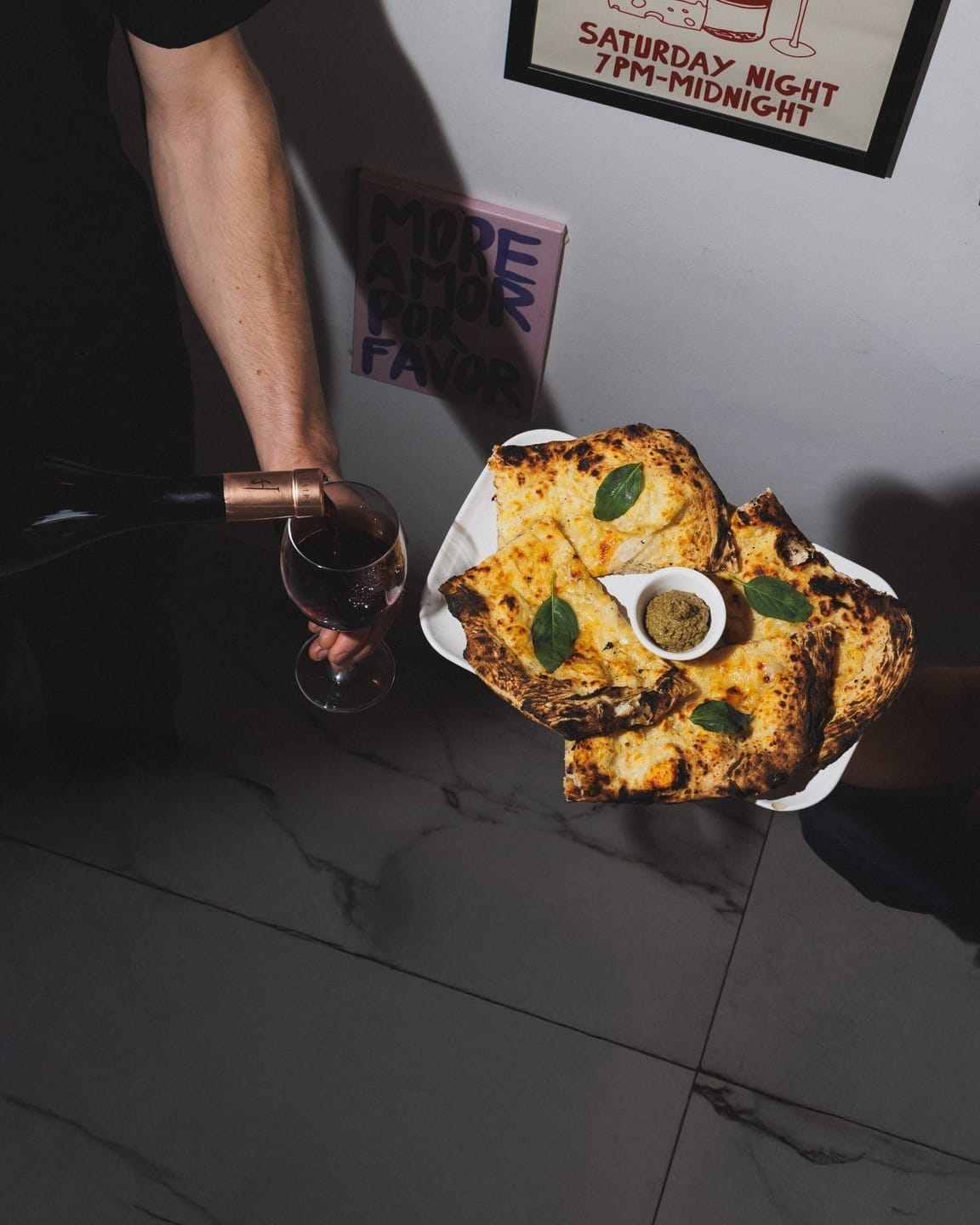
24 hours of rest, and a double kneading
The dough is made on site, left to rest for 24 hours, then given a double kneading before being shaped and sent to the oven. That combination — the rest and the double kneading — is what separates a true Neapolitan from a standard pizza: the dough matures gently, builds its aromas and takes on an airiness you cannot fake.
Time replaces additives. Nothing speeds up the maturation: the rest is what reveals the taste of the wheat and the flour, and it is what makes the pizza light to digest once the meal is over. More demanding than a shortcut, obviously. That is exactly why we do it.
Plenty of water, plenty of patience
Hydration is the proportion of water in the dough relative to the flour. At 70%, the dough becomes tricky to handle: it sticks, it stretches, it forgives nothing. In return, it gives a genuinely airy crumb and a puffed, open rim, soft inside and lightly crisp at the edges.
That is the signature of the contemporary Neapolitan, and it is what we look for on every plate. There is no miracle trick behind it: just consistency, service after service, since the trattoria opened in September 2021.
From the dough to the table
- The rest24 hours, with no accelerator and no additive.
- The double kneadingTwo passes, for an even, supple dough.
- The shapingBy hand, right before service.
- The wood-fired ovenA few seconds at 480°, and it is ready.
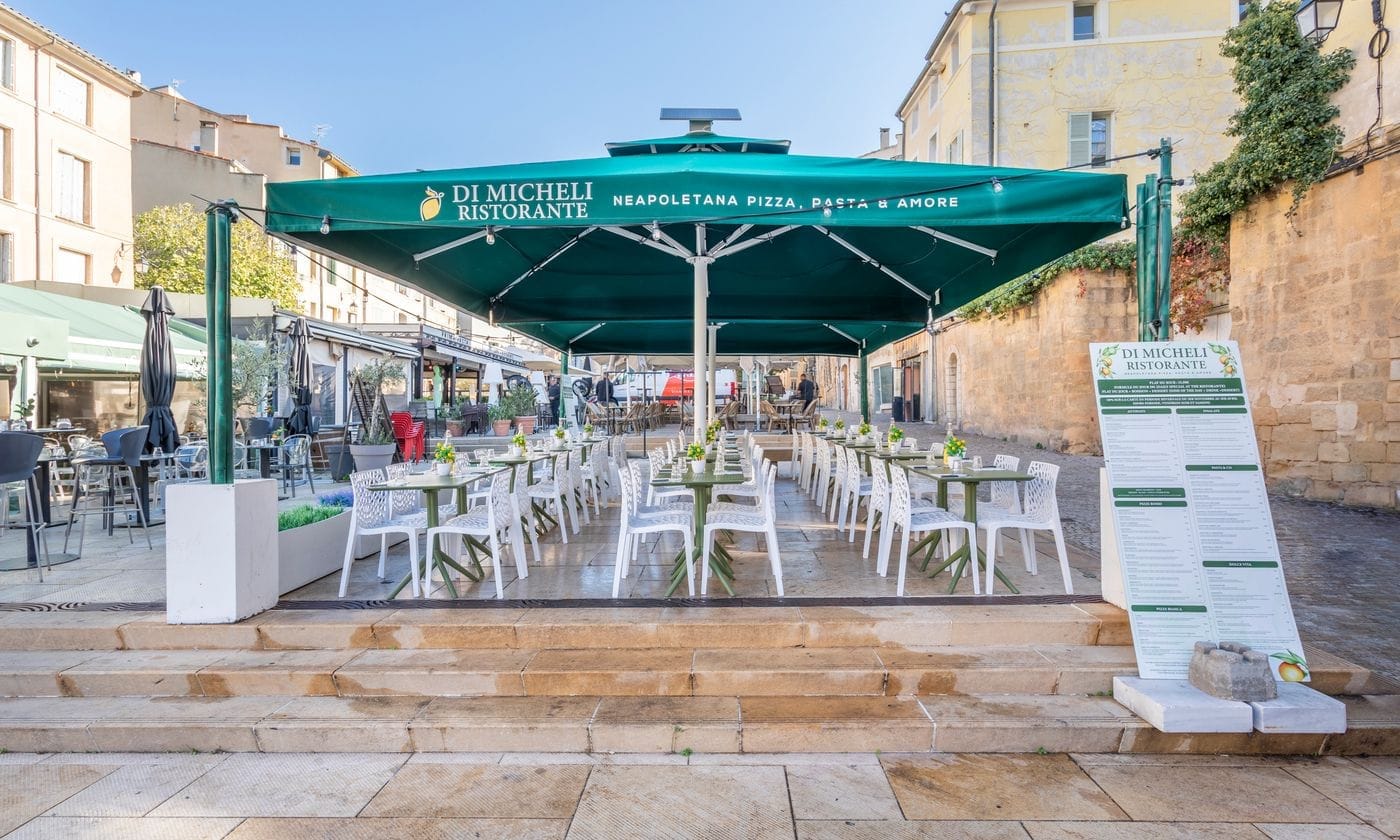
It takes time to move fast
24 hours of rest, a few seconds of baking
Place des Cardeurs, inside or on the terrace: the pizza leaves the oven scorching, the rim still puffed. A whole day of work is judged in a single bite.
No frozen dough ever enters the kitchen
Our dough is made on site, like the rest of our deliberately short menu. Fresh produce, no frozen dough: that has been the rule since we opened, and it takes no exceptions. A short menu is the condition for holding that standard at every single service.
A few seconds only in the wood-fired oven at 480° are then enough to catch the 24-hour fermented dough. The intense heat puffs the rim and brings out its toasted notes — yesterday's work, revealed in an instant.
Our team is in the dining room to talk about it. A question about the dough, the bake, or what happens in between? Ask us, we will gladly tell you.
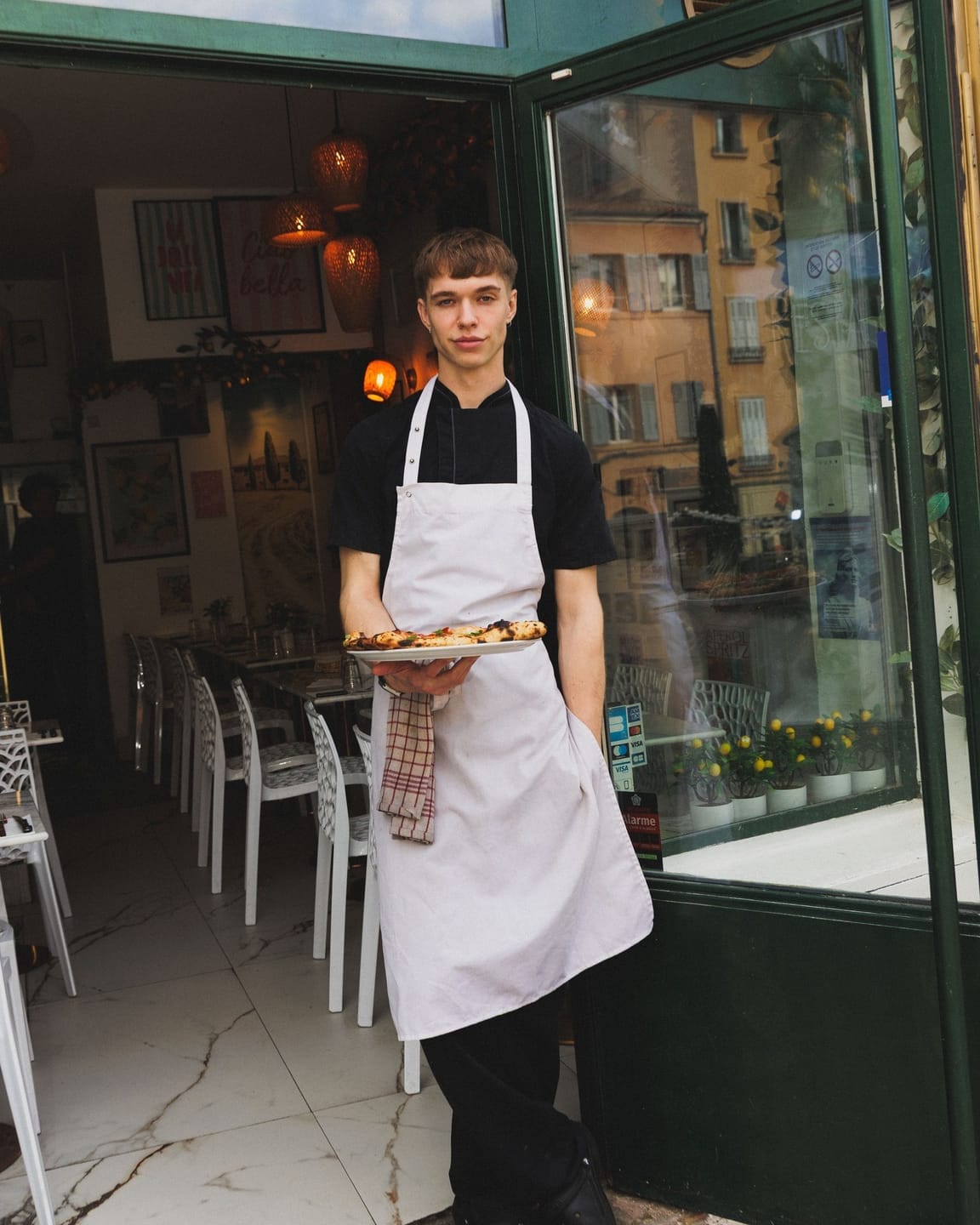
The 24-hour dough, Di Micheli's signature
The 24-hour fermented dough sits at the heart of our Neapolitan pizza, Place des Cardeurs in Aix-en-Provence. Our dough is prepared, left to rest for 24 hours and given a double kneading before being shaped and baked. That combination gives the dough its lightness, its aromas and the airiness that sets a true Neapolitan apart from a standard pizza.
Working at 70% hydration takes patience and consistency. The more water a dough holds, the trickier it is to handle — but the airier the crumb once baked. That is what gives our pizzas their puffed, open rim, soft inside and lightly crisp at the edges.
The dough is then baked for a few seconds only in a wood-fired oven at 480°. The intense heat catches it, puffs the rim and brings out its toasted notes. Like the rest of our short menu, everything is made in house, with fresh produce and no shortcuts: that is how we have worked since the trattoria opened in September 2021.
Fermentation is a fascinating natural process, found far beyond pizza. To better understand what time brings to a dough, browse the fermentation page on Wikipedia, then come and taste it on our plates, Place des Cardeurs.
It all comes together in the Neapolitan pizza, revealed by the wood-fired bake. Our magazine details the benefits of long fermentation and goes back to the history of Neapolitan pizza. The rest is tasted at the table: see you very soon on Place des Cardeurs, in Aix-en-Provence.
Keep tasting
A few pages to go further around our dough and our Neapolitan pizzas in Aix-en-Provence.
Your questions about the 24-hour dough
Why let the dough rest for 24 hours?
A 24-hour rest, combined with a double kneading, lets the dough mature gently. It becomes lighter, airier and easier to digest than a dough worked in a hurry. That is what makes the difference in a true Neapolitan.
Is 24-hour fermented dough easier to digest?
Yes, that is one of its main benefits. The resting time improves the texture and makes the pizza easier to digest, so you finish the meal without heaviness.
What does 70% hydration mean?
It is the proportion of water in the dough relative to the flour. High hydration gives an airy, open crumb, but it takes real craft to master.
Is your dough made in house?
Yes, our dough is made on site, like the rest of our short menu. We work with fresh produce and no frozen dough, and have done since our trattoria opened in September 2021.
Why is the bake so fast?
Because the wood-fired oven reaches 480°. A few seconds are enough to catch the 24-hour fermented dough, puff the rim and bring out its toasted notes, while keeping the centre soft.
Where can I taste your 24-hour fermented dough pizza?
At Di Micheli, 13 Place des Cardeurs, 13100 Aix-en-Provence, right in the pedestrian centre. We welcome you inside or on the terrace, at lunch and dinner, seven days a week.
Taste our 24-hour fermented dough
Book your table at Di Micheli, Place des Cardeurs, and judge for yourself after 24 hours of waiting.