A long-fermented dough
24 hours of fermentation at 70% hydration, then shaping by hand. Time does the work instead of additives.
See you on Place des Cardeurs.
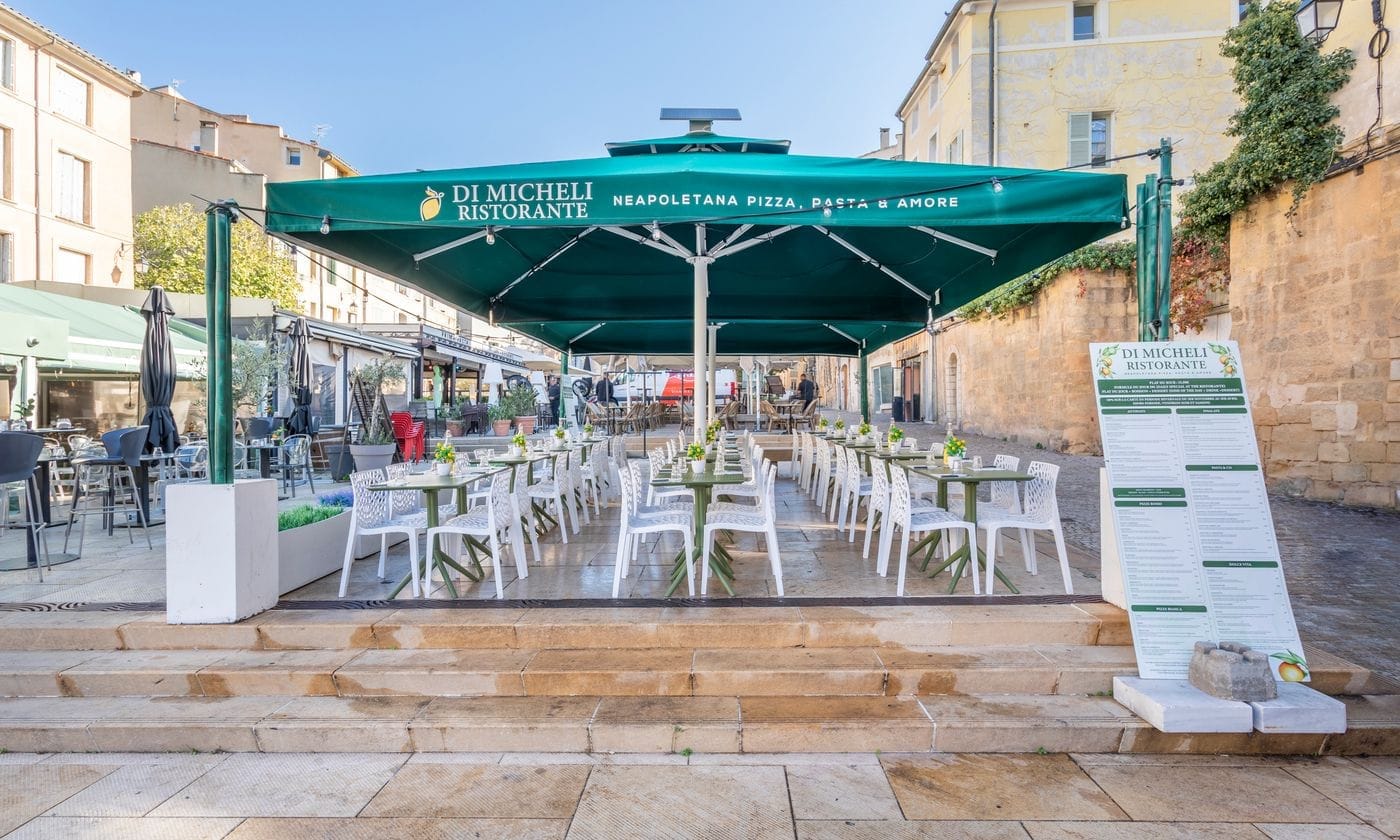
13 Place des Cardeurs, 13100 Aix-en-Provence
Lunch : 11h30-14h30
Dinner : 18h00-23h00
It intrigues as much as it delights: long-fermented dough, an airy cornicione, a lightning bake in a wood-fired oven. Here is what makes a true Neapolitan pizza, and the way we work it at Di Micheli, Place des Cardeurs in Aix-en-Provence.
It is not the topping that defines Neapolitan pizza, but the dough, the bake and the choice of produce. Everything else follows from that.
24 hours of fermentation at 70% hydration, then shaping by hand. Time does the work instead of additives.
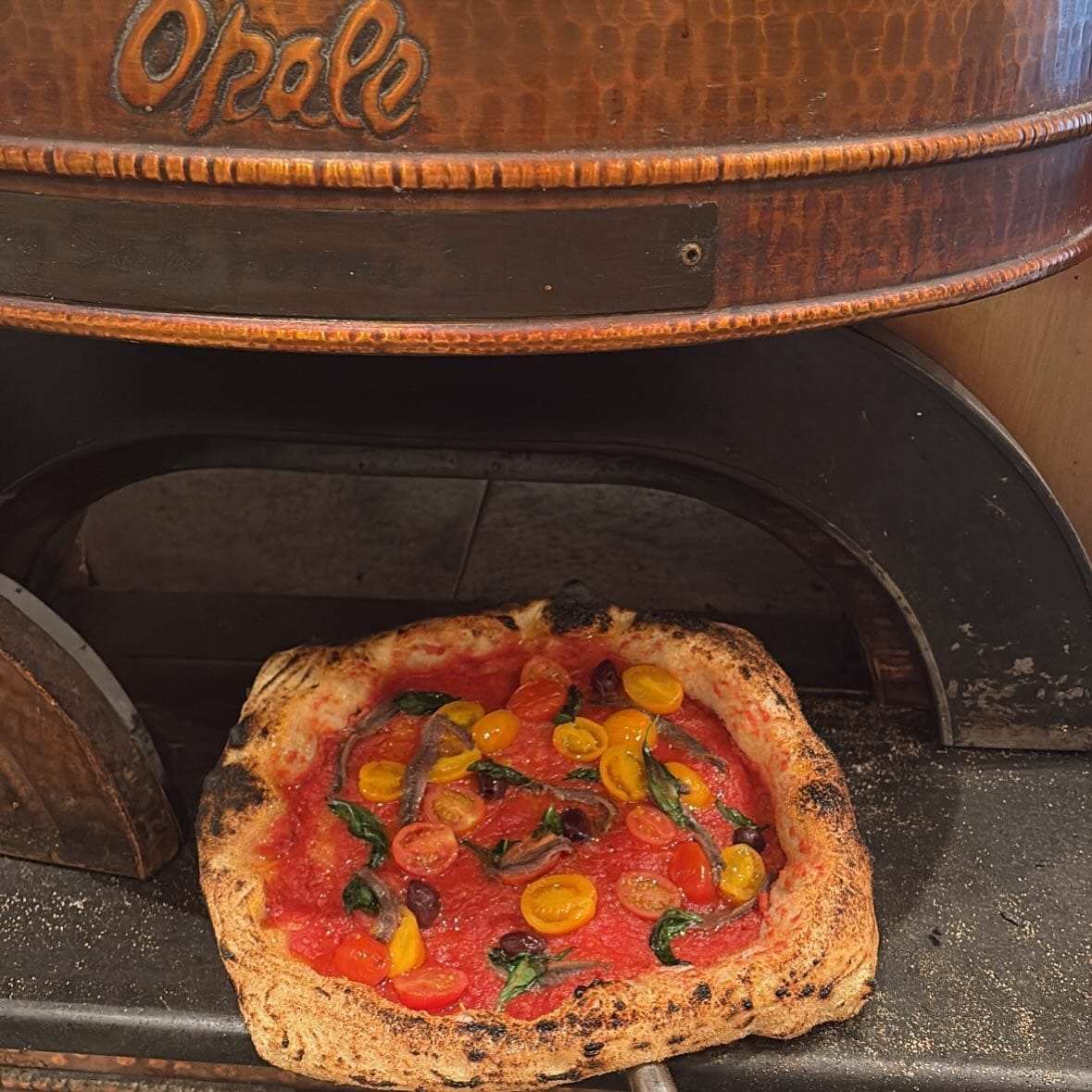
Over 480° under the vault, and a few moments only. The heat seizes the dough, puffs the rim and marks it with blisters.
A deliberately short menu, fresh produce, no frozen dough. Few elements, but each one chosen to hold its place.
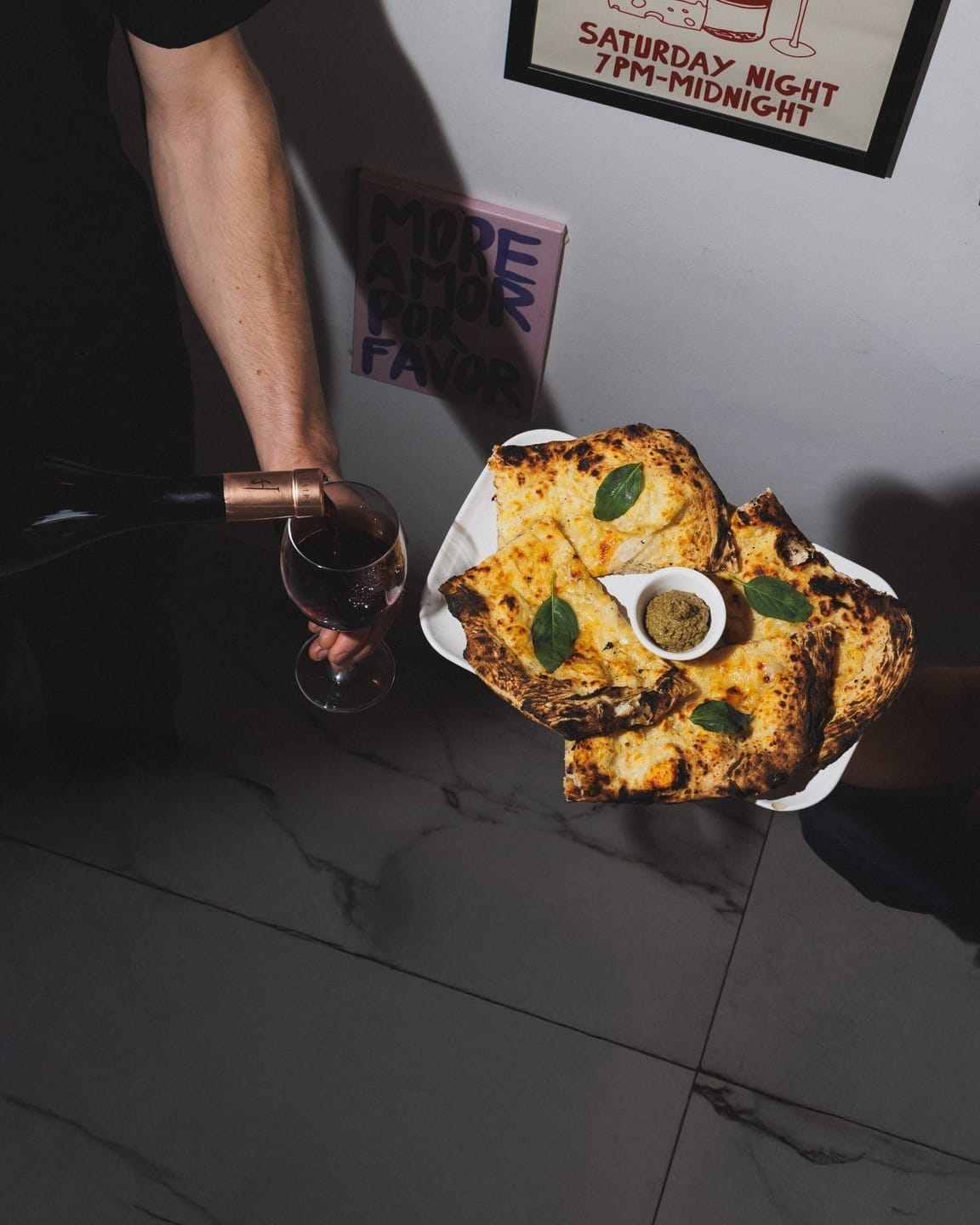
Neapolitan pizza was born in Naples and you recognise it first by its texture: a supple base, slightly moist at the centre, framed by a puffed, open-crumbed cornicione. Where a classic pizza plays on thinness and crunch, this one bets on softness and the air trapped in the rim.
That texture comes from the dough. At Di Micheli it ferments for 24 hours at 70% hydration before being shaped by hand. A long fermentation builds the aromas, lightens the dough and makes it easier to digest: it rises naturally in the oven and yields the airy cornicione typical of Naples. It is a patient gesture, with no shortcuts, repeated at every service.
A Neapolitan pizza spends only a few moments in a wood-fired oven heated to over 480°. That intense heat seizes the dough almost instantly: the cornicione puffs, colours and picks up its small signature blisters, while the centre stays soft.
No standard electric oven reproduces that result. At Di Micheli the wood-fired oven sits at the centre of the pizzeria: it is what gives each pizza its Neapolitan character, and it is what the dough waited 24 hours for.
It is not told, it is tasted
Place des Cardeurs, inside or on the terrace: the pizza leaves the oven and arrives scorching hot. The cornicione is still supple, the centre soft. That is where everything is settled.
Beyond the technique, Neapolitan pizza is above all a pleasure to share. In our trattoria on Place des Cardeurs, right in the heart of Aix-en-Provence, we serve it at lunch and dinner, inside or on the terrace.
Our menu stays deliberately short to guarantee freshness, and everything is made in house, with no frozen dough. From the classic margherita to more contemporary recipes, every pizza starts from the same 24-hour fermented dough.
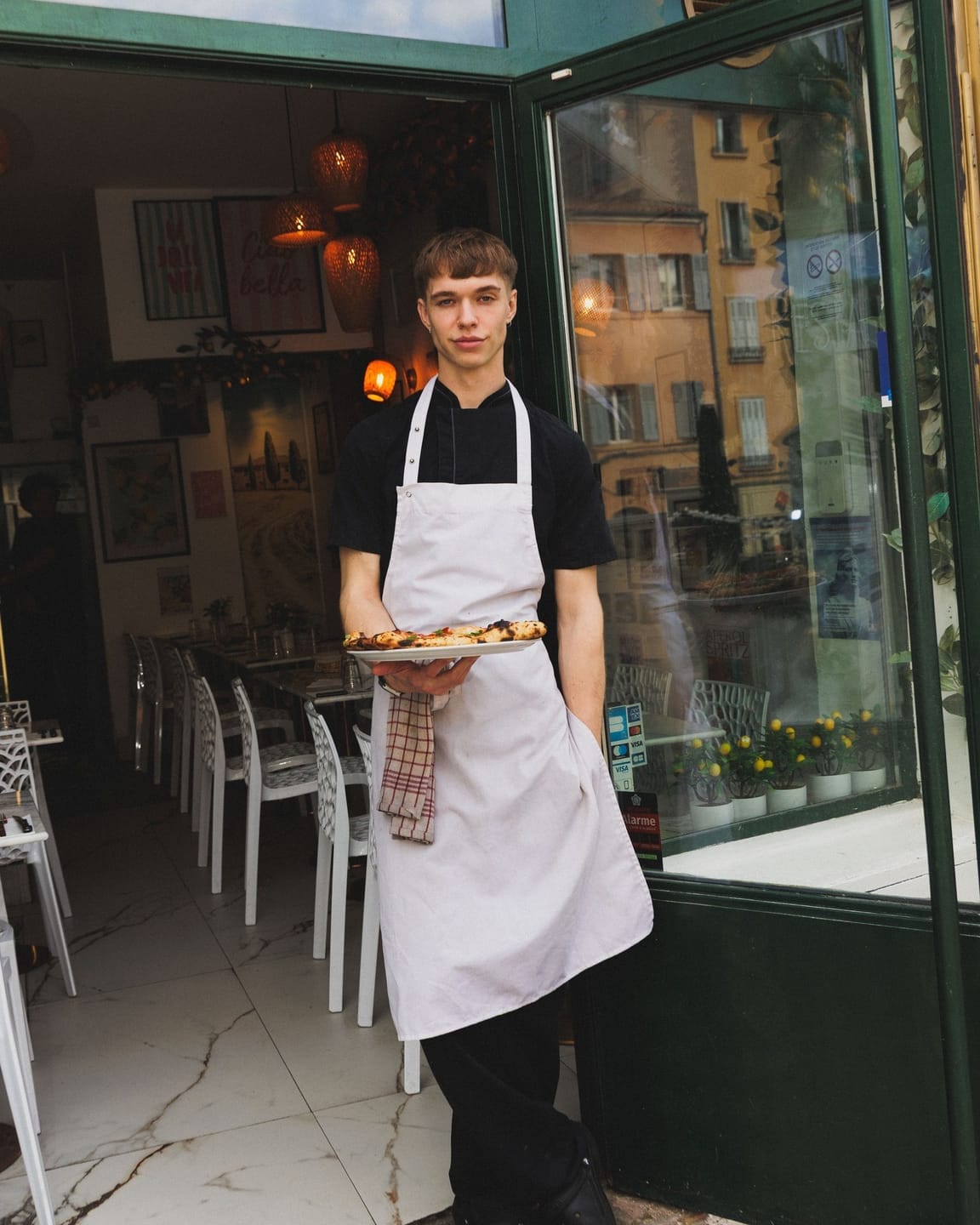
Our team is here to guide you. Torn between a margherita and a burrata? Ask us and we will settle it together.
It is one of the questions we get asked most in the dining room. Neapolitan pizza intrigues people: it is talked about a lot and recognised rarely. Rather than answering only between two services, we wanted to gather a clear explanation here, so everyone understands what is happening on their plate.
We are a family trattoria open since September 2021, and we make a contemporary Neapolitan: tradition for the dough and the bake, an assumed freedom on the toppings. What matters to us is that you know what you are eating and why it tastes good.
Neapolitan pizza has a rich history and even international recognition. To learn more about its origins and its codes, browse Neapolitan pizza on Wikipedia, then come and taste it at our table.
It all starts with the Neapolitan pizza, its 24-hour fermented dough and its wood-fired bake. Then everyone picks a topping: the margherita way or the burrata pizza way. Whether you want to understand what makes a true Neapolitan or simply fancy tasting one straight from the wood fire, the answer comes down to a booking. See you very soon in Aix-en-Provence.
A few pages to go further after your read, from the fermented dough to booking your table.
Neapolitan pizza is a pizza born in Naples, recognisable by its soft dough, its puffed and open-crumbed cornicione and its very fast bake at high temperature. At Di Micheli, in Aix-en-Provence, we offer a contemporary version baked in a wood-fired oven.
A classic pizza is often thin and crisp, while the Neapolitan has a more supple base and airy edges. The difference comes mainly from the long-fermented dough and the lightning bake in a wood-fired oven.
At Di Micheli the dough ferments for 24 hours at 70% hydration. That long fermentation builds the aromas, makes the pizza lighter and easier to digest, and yields the airy cornicione typical of Naples.
It bakes in a wood-fired oven heated to over 480°, in a few moments only. That intense heat seizes the dough, puffs the cornicione and gives it its small signature blisters.
Because the bake is extremely brief. The oven seizes the dough without having time to dry it out: the rim puffs and colours while the centre stays supple and slightly moist. That is not a flaw, it is the signature of the Neapolitan.
At Di Micheli, 13 Place des Cardeurs, 13100 Aix-en-Provence, right in the pedestrian centre. We serve our Neapolitan pizzas at lunch and dinner, inside or on the terrace. Book your table to enjoy one.
Now that you know what makes a Neapolitan pizza, time for the tasting: book your table at Di Micheli, Place des Cardeurs.